Published Updated
Seasonal Real Estate Trends: When to Buy in Armenia
Evidence note — updated July 29, 2026: Armenia's Cadastre Committee publishes monthly, quarterly, and annual market reports, but this article has not identified an official series proving a universal seasonal discount by property type. The former 5–12% savings claims have therefore been removed. Treat the seasons below as inspection and negotiation scenarios, not promised price effects.
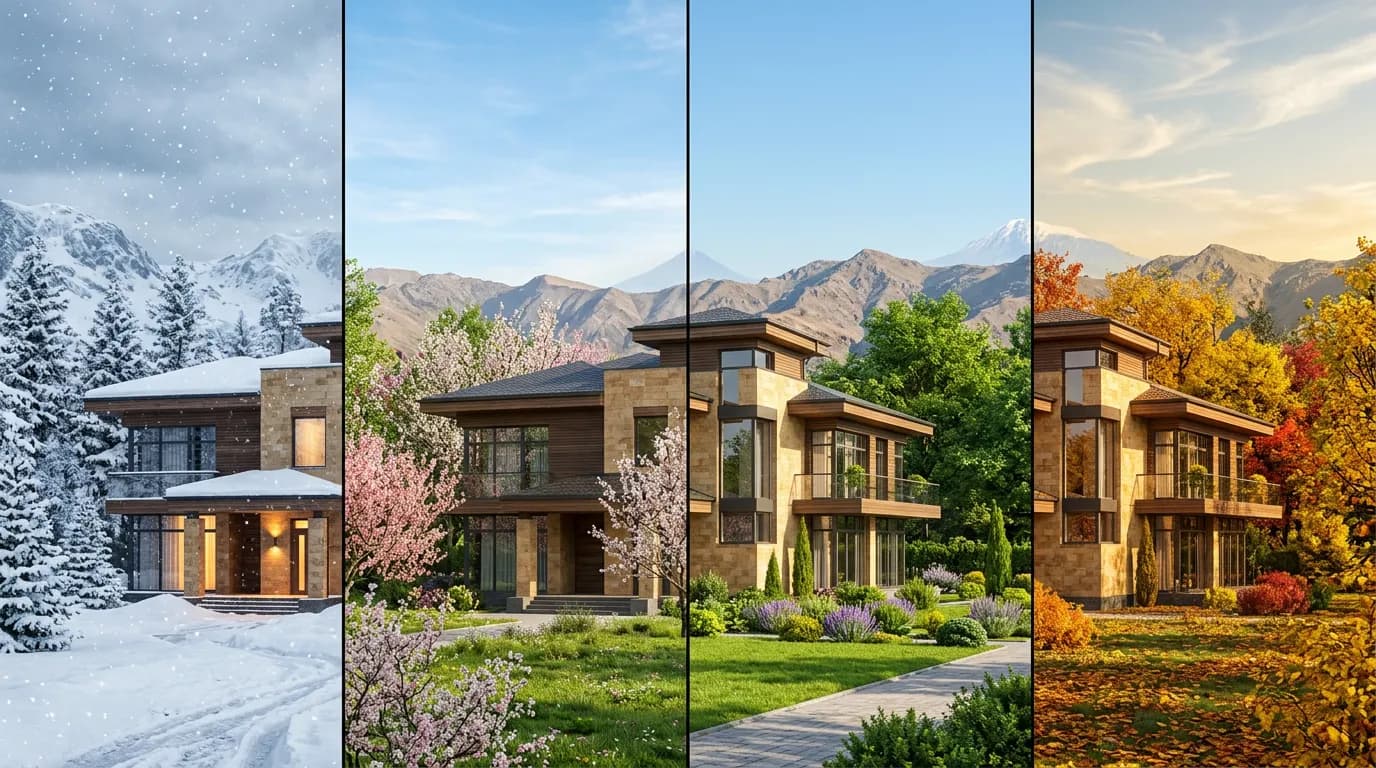
Spring: compare newly marketed supply
Scenario to test: more owners and developers may market property as weather improves.
What to measure: the number of genuinely new comparable units, days on market, written price changes, and whether a “new” listing is a relisted unit. More choice does not automatically mean higher or lower prices.
Practical advantage: daylight and milder weather make it easier to inspect facades, roofs, drainage, streets, and nearby construction.
Summer: test demand rather than assume a peak
Scenario to test: travel and diaspora visits may increase inquiries for some central or resort properties, while other segments may show little change.
What to measure: competing offers for the same unit, the seller's written deadline, and comparable transactions or asking prices. Do not infer a citywide “summer premium” from a busy viewing.
Practical advantage: assess heat exposure, cooling, street activity, noise, sunlight, and outdoor amenities under summer conditions.
Autumn: ask what changed after summer
Scenario to test: a unit still available after summer may have a more flexible seller—or it may simply be overpriced or have a property-specific problem.
What to measure: original listing date, complete price history, failed reservation reasons, developer inventory, and whether an incentive changes the total cost or only the payment schedule.
Practical advantage: rain can reveal drainage, access, facade, and common-area issues that are less visible in dry weather.
Winter: inspect performance, not a presumed discount
Scenario to test: fewer viewings can create negotiating room in an individual case, but lower inventory can also reduce choice.
What to measure: actual written offers on the same property; do not compare unrelated summer and winter units. Separate a cash-price reduction from free upgrades, delayed payments, or furnishing.
Practical advantage: check heating, insulation, window condensation, hot-water stability, snow access, daylight, and common-area maintenance in demanding conditions.
Armenia-specific factors to verify
- Holiday timing: confirm the seller, notary, bank, and Cadastre timetable before relying on a year-end closing.
- Diaspora visits: relevant to some locations and property types, but not evidence of a universal price effect.
- Developer targets: ask for a dated written offer. A quarter-end promotion may change installments or add-ons without reducing the base price.
- Construction stage: compare permit, completion, handover, and title-registration status. Seasonal weather can affect work, but every project's schedule is different.
A reliable timing comparison
- Track the same project, unit type, floor range, condition, and payment method over time.
- Save dated screenshots and written offers; asking prices can change without a completed transaction.
- Calculate the total package: price, installment cost, mortgage, fees, parking, storage, finishes, and incentives.
- Compare with the Cadastre Committee's registered-market reports, recognizing that official transaction data and developer asking prices measure different things.
- Buy only when the property, documents, financing, and downside case work for you—not because a calendar month is labeled “best.”
Conclusion
Season can improve what you are able to inspect and can change the negotiating context of a particular property. It does not guarantee a discount. Selection, documentation, building quality, financing, and the seller's actual position are stronger decision inputs than a broad seasonal rule.